

Industrial Homogenizing Machines for Food, Cosmetics and Pharmaceutical Production
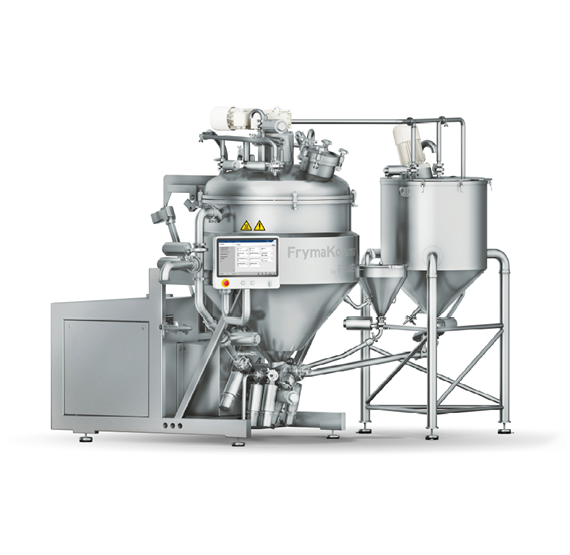
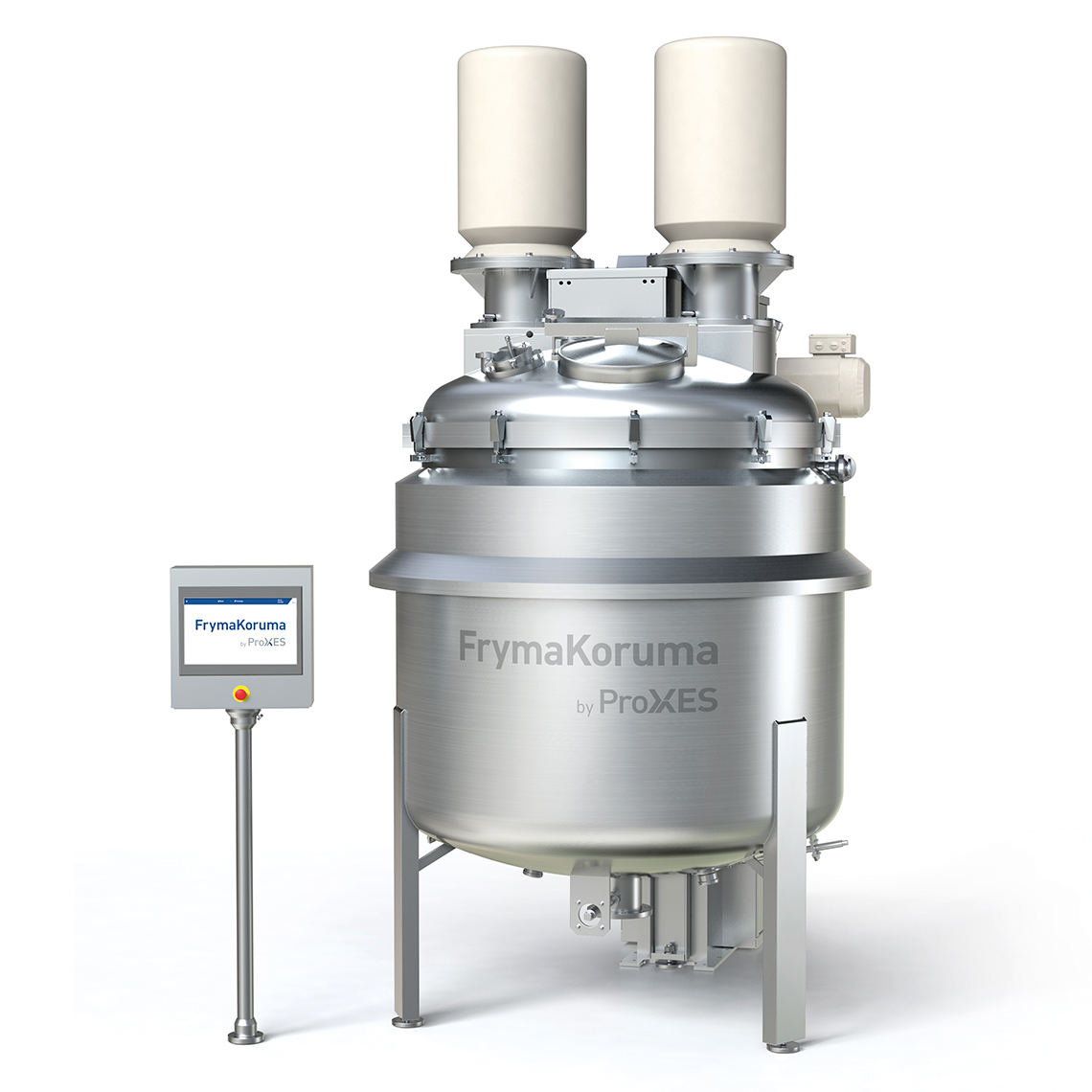
ProXES designs and manufactures industrial homogenizing machines for the food, cosmetics, pharmaceutical and advanced materials industries. Homogenizing uses mechanical energy to reduce droplet or particle size and distribute different phases uniformly. Depending on the formulation and required product stability, emulsifiers or stabilizers may additionally be used. The ProXES portfolio spans batch vessels, inline units and continuous production lines, covering everything from laboratory trials to throughputs of several thousand litres per hour. All machines follow a modular design principle, so that vessel and mixing element can be combined to match each individual process step. ProXES builds these systems under the FrymaKoruma, Stephan and Terlet brands and supports customers from the first product trial in its test centres through to commissioning on site.
What Is Industrial Homogenizing?
Industrial homogenizing is a mechanical process used to create a uniform distribution of droplets, particles or phases within a product. In liquid systems, rapidly rotating tools generate shear forces that reduce droplet or particle size and distribute the dispersed phase evenly throughout the continuous phase. Depending on the formulation, homogenizing can be combined with mixing, dispersing or emulsifying processes. Emulsifiers or stabilizers may additionally be used where required by the product formulation. The result is a consistent texture, colour and viscosity and improved physical product stability.
How Industrial Homogenizing Works: Key Process Steps
Industrial homogenizing follows a defined sequence. Each step is critical to achieving a stable, reproducible result:
- Raw Material Preparation: The individual phases are weighed, dosed and pre-conditioned. Powders are wetted and liquid phases are brought to their starting temperature before they enter the machine.
- Pre-Mixing and Wetting: A coarse dispersion is created so that agglomerates are broken up and every component is fully wetted. This step determines how efficiently the following shear stage works.
- Temperature Control: Direct or indirect heating and cooling through the double jacket brings the product to its ideal processing temperature. Heat-sensitive formulations are held within a narrow temperature window throughout.
- High-Shear Homogenizing: Rotor-stator tools, toothed rings or cutting sets generate intense shear forces and turbulence in a narrow working gap. The dispersed phase is broken down into fine droplets or particles and distributed evenly.
- Droplet and Particle Size Reduction: Gap geometry, tool speed and residence time are adjusted until the required size distribution is reached. Multiple passes or an inline unit downstream allow the result to be fine-tuned.
- Vacuum Deaeration: Processing under vacuum removes entrapped air that would otherwise cause oxidation, foam and inaccurate filling weights. Deaeration also improves colour stability and shelf life.
- Quality Control and Transfer: Droplet size, viscosity and stability are verified against specification before the product is transferred to storage, filling or downstream pasteurizing and sterilizing steps.
Key Challenges in Industrial Homogenizing
Homogenizing in industrial environments involves complex technical and regulatory demands. Common challenges include:
- Keeping droplet and particle size distribution identical from the first batch to the last
- Producing stable mixtures without emulsifiers or stabilizers, as required by clean-label formulations
- Scaling results from laboratory trials to full production volume without loss of quality
- Processing high-viscosity products such as pastes, spreads and ointments without dead zones in the vessel
- Protecting heat-sensitive and shear-sensitive ingredients from damage during intensive mechanical treatment
- Removing entrapped air reliably, since residual air causes oxidation, foam and filling weight deviations
- Meeting GMP and hygienic design requirements in pharmaceutical and cosmetics production, including CIP and SIP capability
- Minimising product loss, cleaning effort and downtime during frequent recipe changeovers
- Managing the specific energy input so that throughput targets are met without overheating the product
ProXES Homogenizing Machine Portfolio
ProXES offers eleven machines for homogenizing, covering different industries, production scales and product requirements:
-
PROXXD 700 – Food High Shear Emulsifier

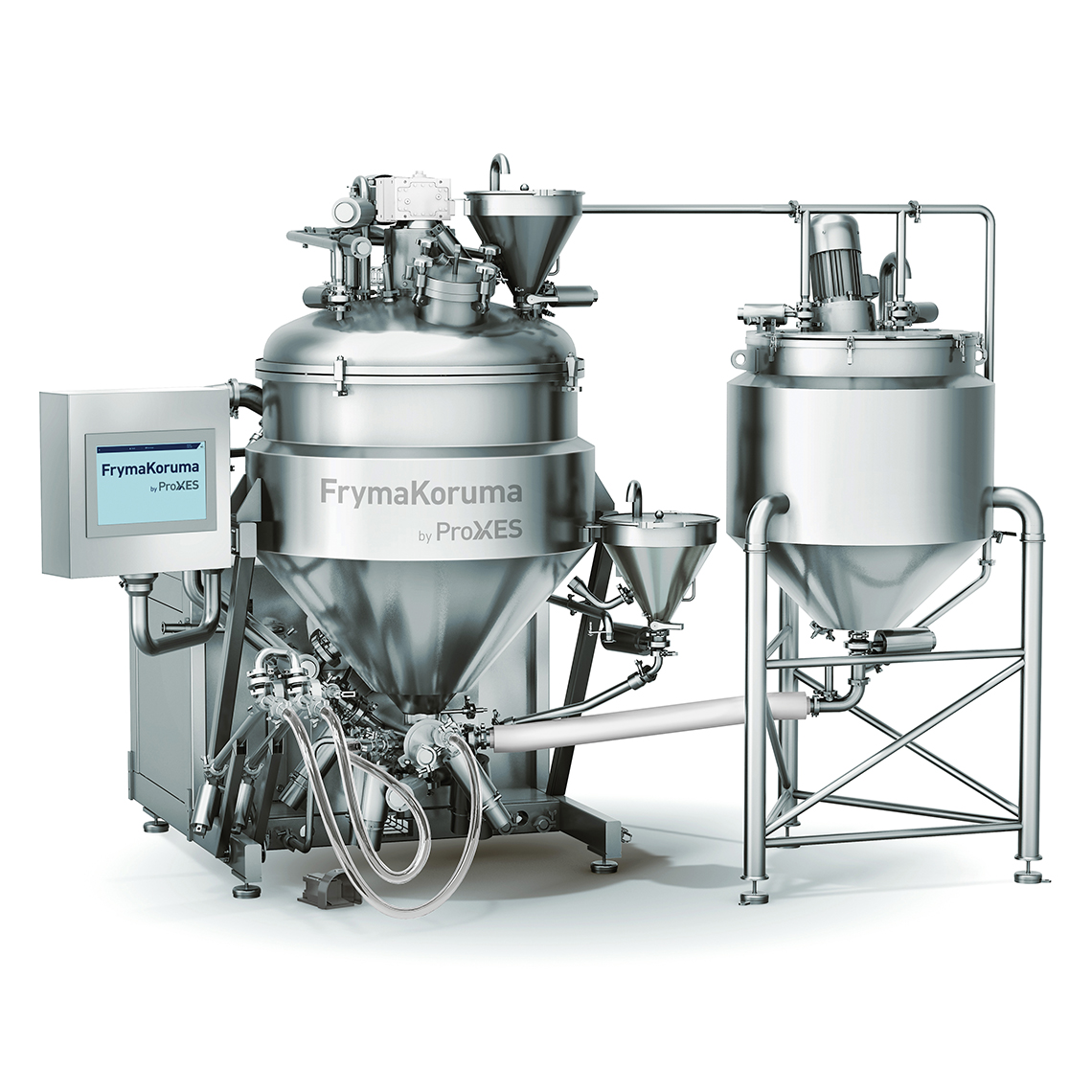
The PROXXD 700 is the high shear machine for demanding food applications that require homogenizing and emulsifying in a single, tightly controlled step. It reaches a production capacity of up to 6,000 kg/h for full-fat mayonnaise and up to 4,000 kg/h for low-fat recipes with 30 percent oil, with oil dosing of up to 3.0 kg/s. Specific energy input averages around 5 kWh per tonne.
Key features: batch volume 500 l, oil dosing up to 3.0 kg/s, vacuum processing, FrymaKoruma technology
-
DIL – Inline Emulsifier
The DIL is an inline machine that homogenizes directly in the product flow of a continuous production line. Because it works in-line rather than in a vessel, it adds homogenizing capacity to an existing line with a very small footprint and without an additional batch step.
Key features: continuous inline operation, compact footprint, easy line integration, adjustable shear intensity
-
VME – Universal Mixing and Dispersing
The VME is a universal mixing and dispersing unit for processes that combine homogenizing with mixing and dispersing duties. Its modular design lets the mixing element be matched to the viscosity and sensitivity of the individual product.
Key features: universal mixing and dispersing, modular tooling, suitable for varying viscosities
-
Microcut 15 – Fine Cutting and Emulsifying
The Microcut 15 combines fine cutting with emulsifying and is used where solid components have to be reduced in size and dispersed in the same pass. It is the smaller unit in the Microcut family and suits laboratory work, pilot production and smaller production volumes.
Key features: fine cutting and emulsifying in one pass, inline operation, exchangeable cutting sets
-
Microcut HD150 – Heavy-Duty Fine Cutting and Emulsifying
The Microcut HD150 is the heavy-duty version for high-throughput fine cutting and emulsifying. It handles coarser and more fibrous raw materials and is used where a homogeneous structure has to be achieved at production scale.
Key features: heavy-duty design, high throughput, fine cutting and emulsifying, exchangeable cutting sets
-
Combitherm – Flexible and Multifunctional Batch Processing
The Combitherm is a multifunctional batch machine with capacities of up to 4,800 l/h for low-viscosity products. It combines mixing, emulsifying and dispersing with direct and indirect heating, frequency-controlled knives and vacuum processing, which makes it suitable for mayonnaise, ketchup, dressings, dips, baby food and sauces.
Key features: up to 4,800 l/h, mixing, emulsifying and dispersing, direct and indirect heating, vacuum processing, frequency-controlled knives
-
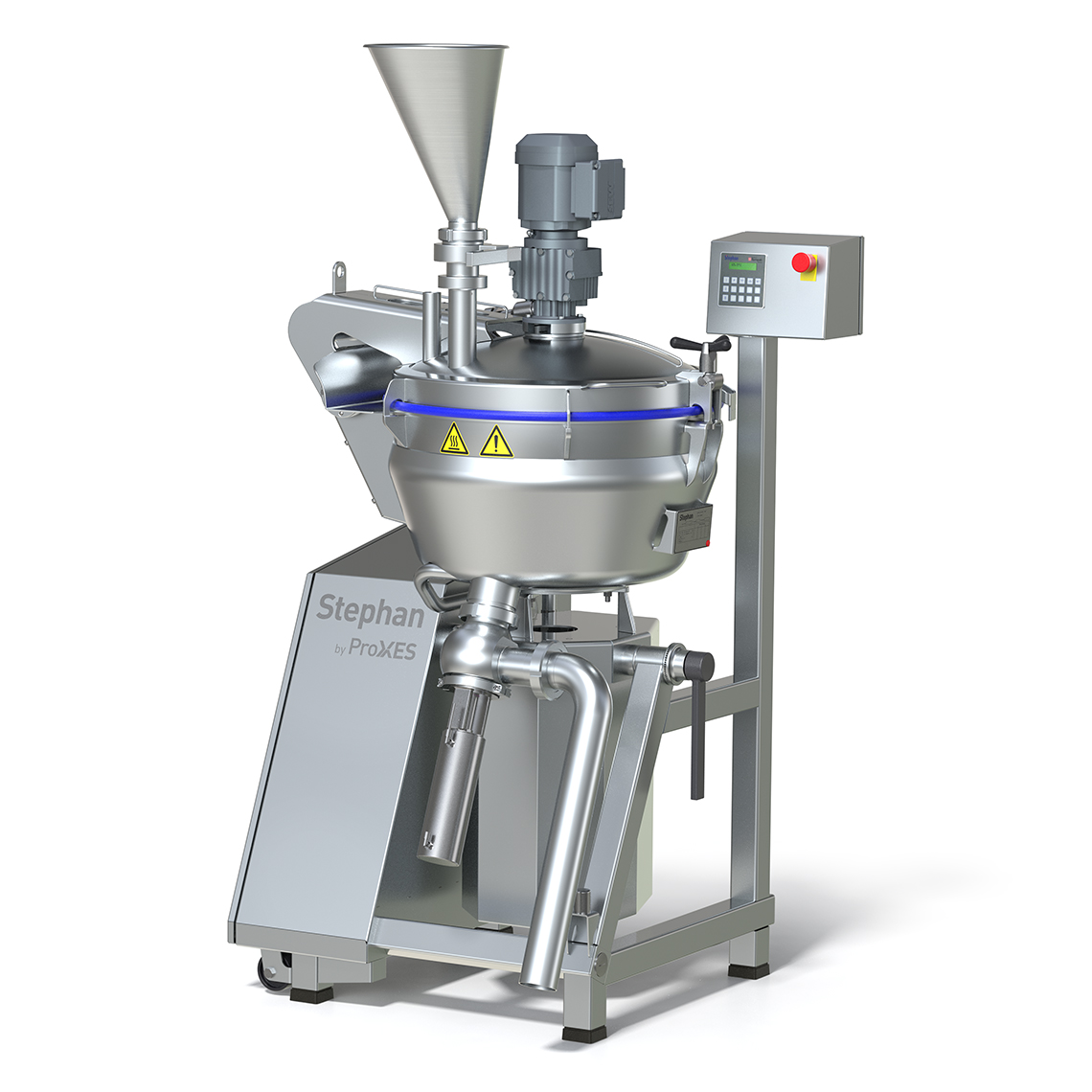
Universal Machine 74 – Small and Medium Batches
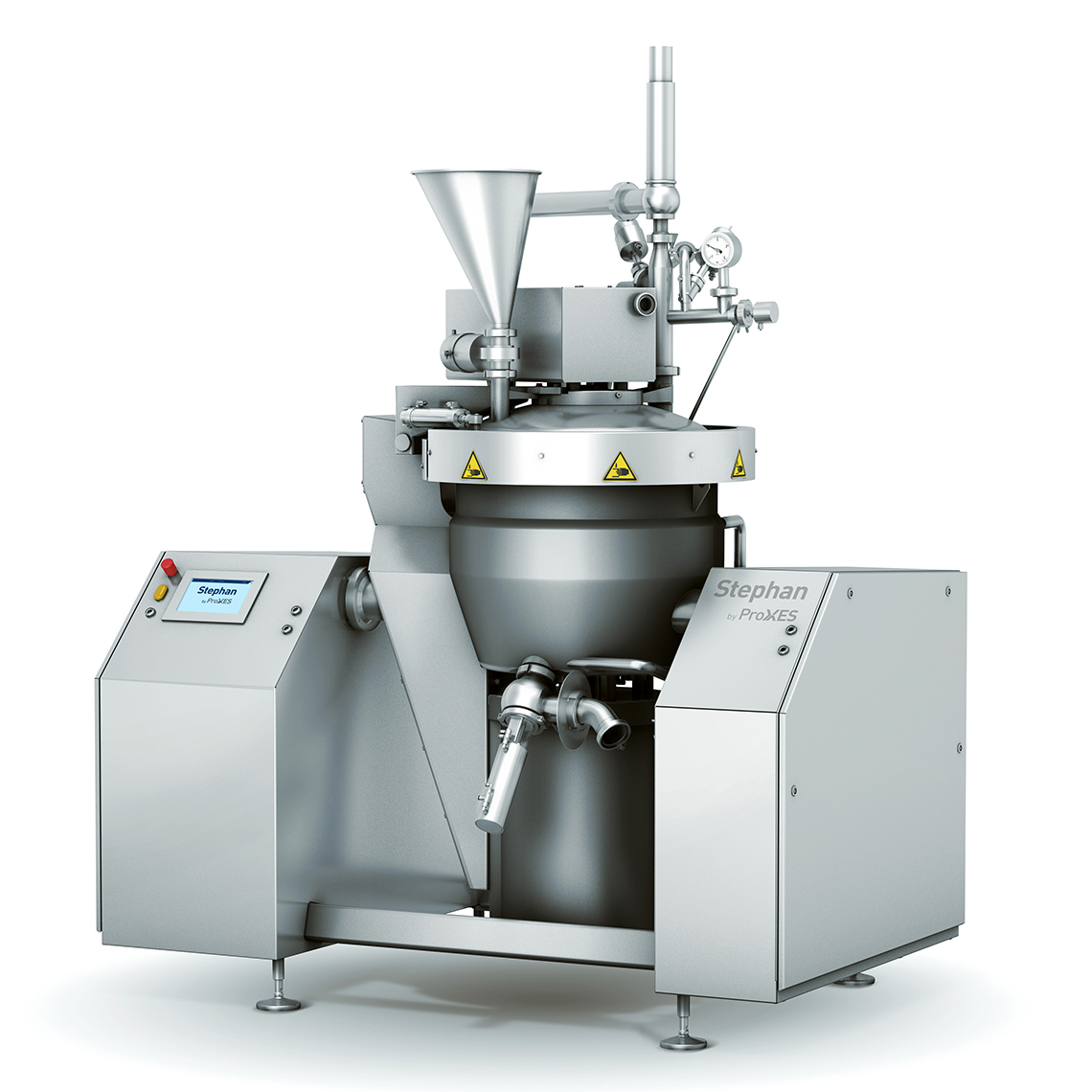
The Universal Machine 74 is an all-in-one batch machine for small and medium production volumes. It covers mixing, cutting and emulsifying, offers direct and indirect heating up to 125 °C, indirect cooling through the double jacket and vacuum processing, which makes it a common choice for processed cheese, purées, sauces and ganache.
Key features: mixing, cutting and emulsifying, heating up to 125 °C, vacuum processing, double jacket cooling
-
Universal Machine 200 – Small and Medium Batches at Higher Volume
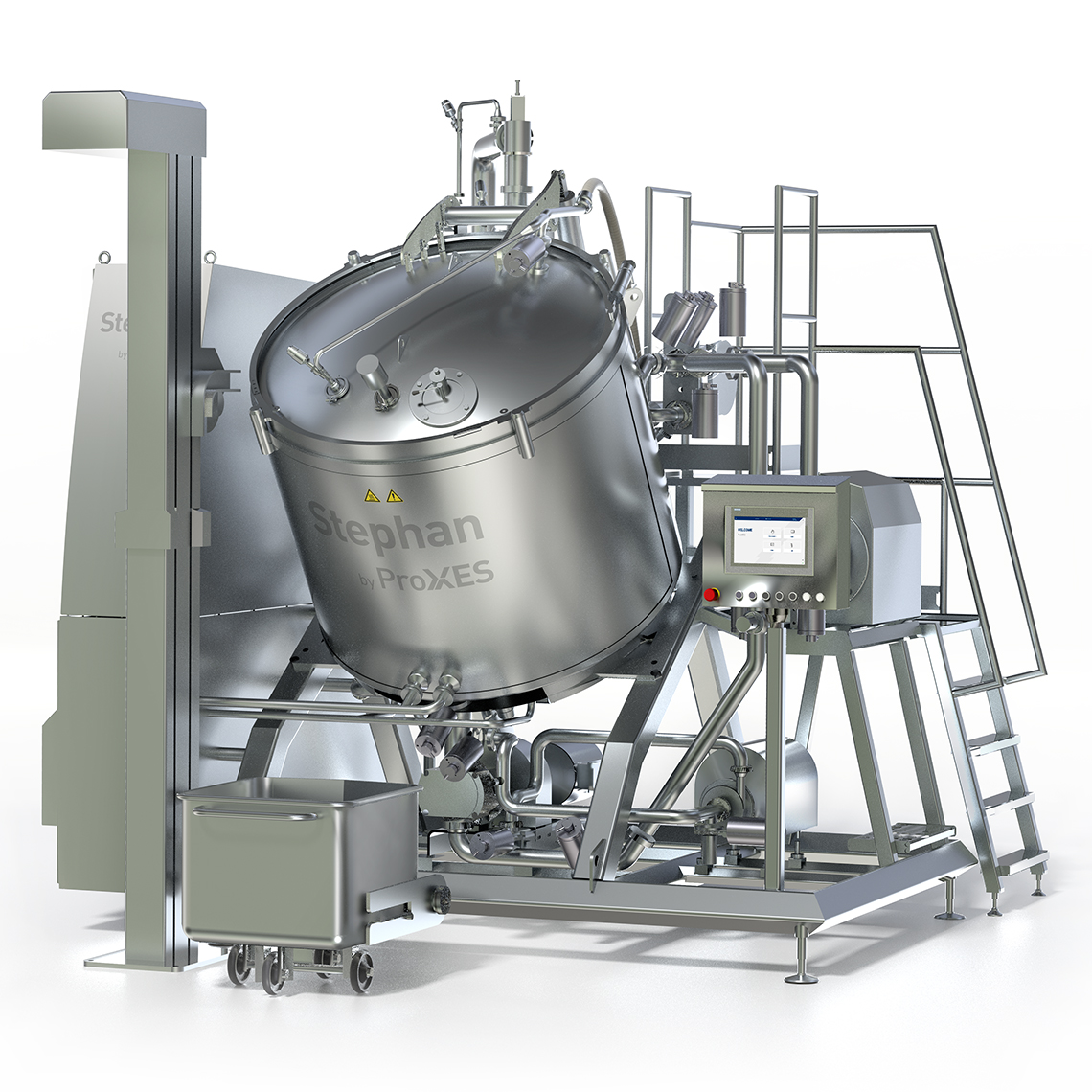
The Universal Machine 200 offers the same all-in-one process range as the UM 74 at a larger batch size. Within the Universal Machine family, capacities reach up to 1,000 l/h for low-viscosity products, and the family scales from laboratory equipment to industrial machines.
Key features: up to 1,000 l/h within the UM family, lab to industrial scale, heating up to 125 °C, vacuum processing
-
Vacutherm – Efficient Hot and Cold Processing
The Vacutherm is designed for processes that alternate between heating and cooling while homogenizing under vacuum. It suits recipes in which thermal treatment and mechanical dispersion have to be closely coordinated.
Key features: hot and cold processing, vacuum operation, combined thermal and mechanical treatment
-
Dinex – Personal Care and Pharma High Shear Emulsifier
The Dinex is the high shear machine for personal care and pharmaceutical products such as creams, lotions, gels and ointments. It is built for hygienic processing environments where reproducible droplet size and documented process parameters are required.
Key features: high shear rotor-stator, hygienic design for pharma and personal care, vacuum processing, batch operation
-
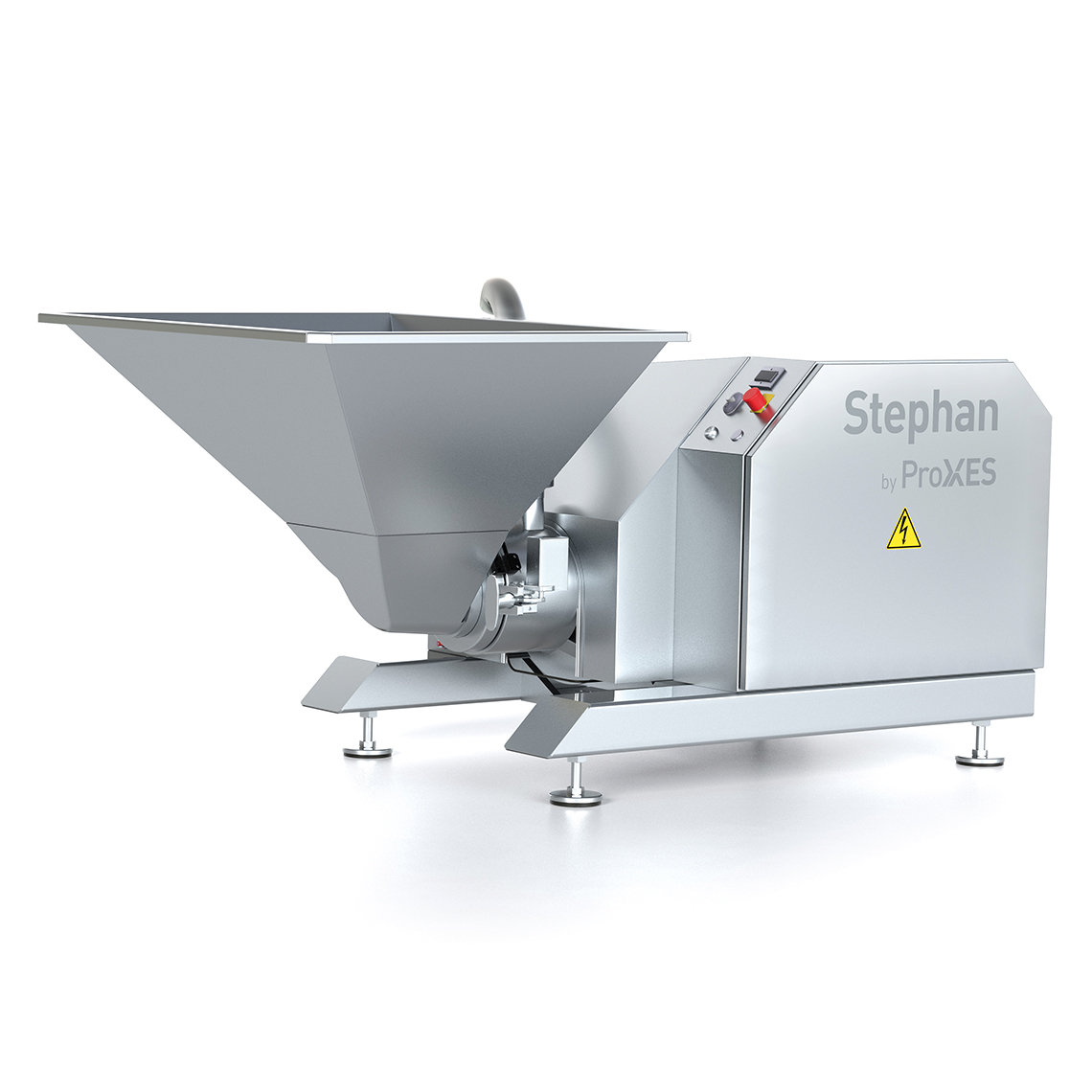
Toothed Colloid Mill – Variable Wet Milling
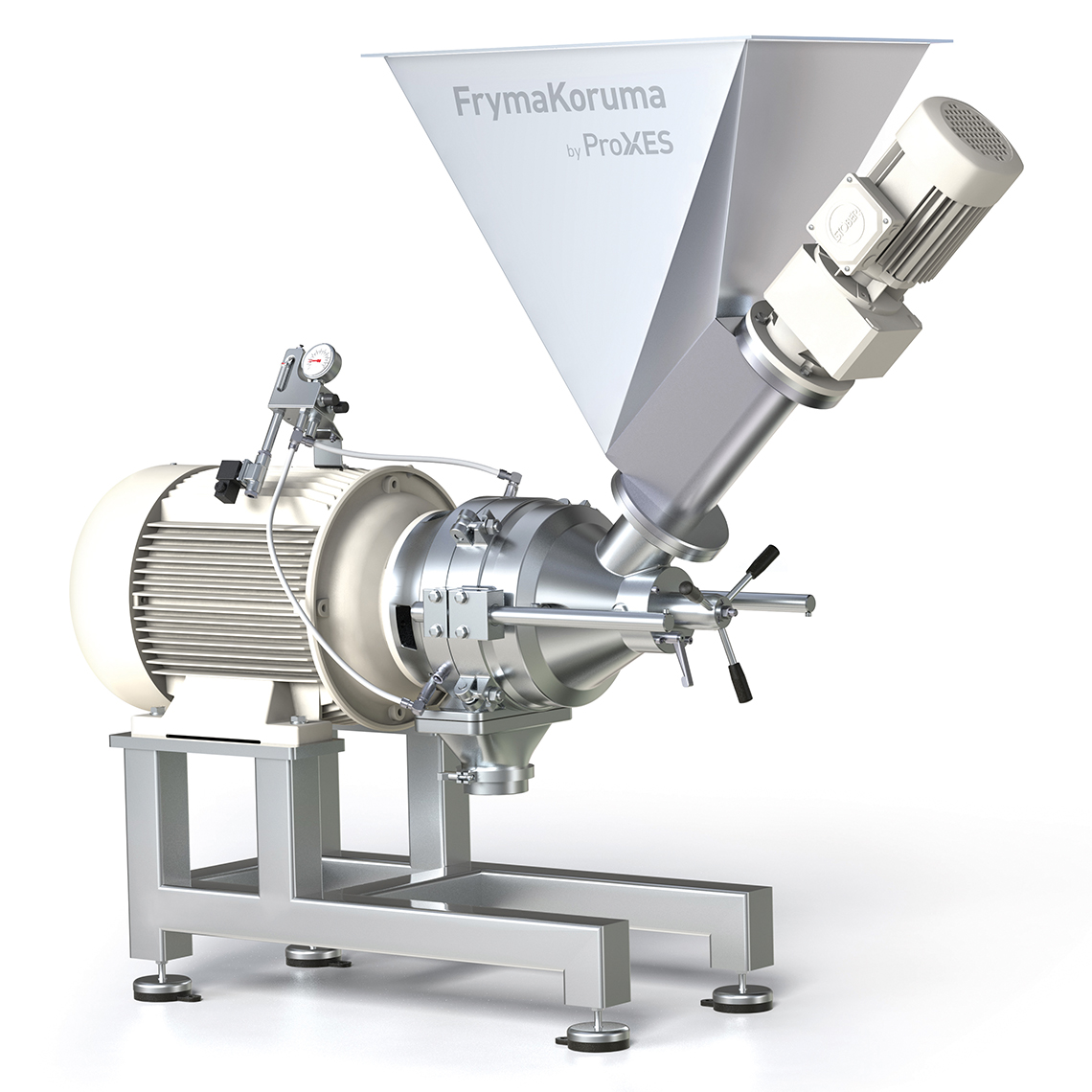
The Toothed Colloid Mill performs variable wet milling for products that need an extremely fine and uniform particle structure, for example mustard, spice pastes and suspensions. The adjustable gap allows the degree of fineness to be set precisely for each recipe.
Key features: adjustable milling gap, very fine particle reduction, suitable for high-viscosity products



NEED TO KNOW MORE? GET IN TOUCH WITH OUR EXPERTS.
FAQ – Frequently Asked Questions about Industrial Homogenizing
Below you find answers to common questions.
-
What is homogenizing in industrial production?
Homogenizing is a mechanical process that reduces and distributes droplets or particles throughout a product to create a uniform mixture. Rapidly rotating tools generate shear forces that break down the dispersed phase and distribute it evenly throughout the continuous phase, helping achieve consistent texture, colour and viscosity across the batch.
-
What is the difference between homogenizing and emulsifying?
Both processes create a fine and uniform distribution of phases, but they describe different aspects of the process. Emulsifying specifically refers to forming an emulsion between two immiscible liquids, while homogenizing is a broader mechanical process used to reduce droplet or particle size and distribute components uniformly. Industrial homogenizers are therefore frequently used as part of an emulsification process.
-
Which industries use industrial homogenizers?
Homogenizers are used in the food industry for mayonnaise, dressings, sauces, processed cheese, baby food and beverages, in the cosmetics and personal care industry for creams, lotions and gels, in the pharmaceutical industry for ointments, suspensions and emulsions, and in advanced materials for chemical suspensions, greases, paints and ceramics.
-
What is the difference between a batch and an inline homogenizer?
A batch homogenizer processes a defined volume per cycle in a vessel and is well suited to frequent recipe changes and flexible production. An inline homogenizer works continuously in the product flow of a production line, which suits high volumes and consistent recipes and requires less floor space.
-
Which ProXES homogenizer is right for my application?
The choice depends on product viscosity, required droplet or particle size, batch size and whether production runs batch-wise or continuously. High-throughput food applications typically use the PROXXD 700 or Combitherm, continuous lines use the DIL inline emulsifier, pharmaceutical and personal care products use the Dinex, and very fine particle structures are achieved with the Microcut or Toothed Colloid Mill. ProXES test centres allow the process to be validated with the customer's own recipe before the machine is selected.