

为您的蛋黄酱生产定制解决方案
ProXES 为蛋黄酱生产的每个步骤提供量身定制的高效技术。从原料加工到最终产品,我们的集成系统可确保最高质量和最高效率。无论您是生产传统蛋黄酱、素食替代品还是独特配方,我们都能为您提供先进的设备、专业的支持和创新的解决方案。这些都能帮助您简化生产流程,高效实现目标,并确保获得一致、可持续的结果。
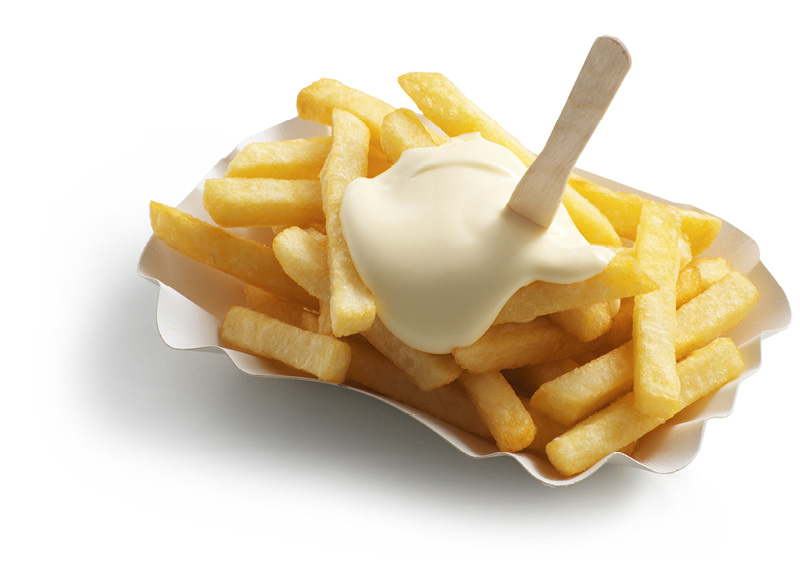
Why choose ProXES for mayonnaise processing?
- High Quality - Gentle processing for optimum texture and taste
- Efficiency - Reduced production times and high throughput, shelf life up to 21 days
- Flexibility - Adaptable to different recipes and production volumes
- Sustainability - Energy-efficient processes and reduced operating costs
How Is Mayonnaise Made in Factories?
In factories, mayonnaise is produced as a stable oil-in-water emulsion on dedicated processing lines. During industrial production, the oil phase is dispersed into tiny droplets between 2 and 10 microns in size - with the majority ideally around 3 to 4 microns. To create these droplets, significant mechanical energy is required, typically applied through high-shear mixing in a rotor-stator system. Without that shear force, the oil droplets would simply recombine over time and the product would separate.
To keep the emulsion stable, an emulsifier is needed. The emulsifier has both an oily and an aqueous side: the oily part penetrates the oil droplet, while the aqueous side faces the surrounding water phase. This is what keeps the emulsion stable and gives mayonnaise its characteristic high viscosity.
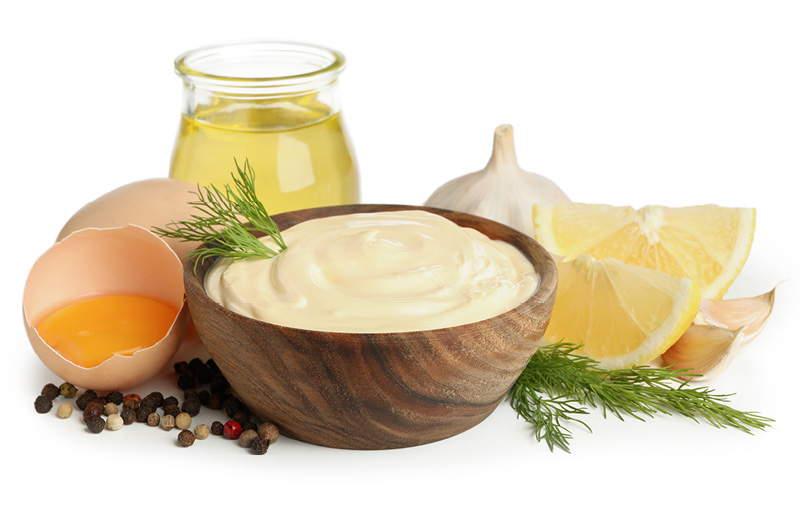
The emulsifier in classic mayonnaise is mainly lecithin, sourced from egg yolk. Full-fat mayonnaise contains 8–10% egg yolk, 79–80% oil, plus vinegar, sugar, salt, and mustard - and no further binding agents. Because of this, full-fat mayonnaise is fully dependent on the stability of the emulsion. In medium and low-fat variants, the water phase is instead bound by starch and/or gums (e.g. xanthan gum), which take over part of the egg yolk's role.
您知道吗?
经典的蛋黄酱配方据说是在 1756 年法国梅诺卡岛被围困时发明的。在没有奶油的情况下,法国厨师用油、蛋黄和醋即兴制作了蛋黄酱。
如今,现代机器每小时可生产多达 10,000 升蛋黄酱,高效、精确、美味!
How Mayonnaise Is Produced - Step by Step
Industrial mayonnaise production in a modern processing plant follows these core steps:
- Ingredient preparation: weighing and dosing of water, vinegar, egg yolk (or plant-based lecithin), mustard, salt, sugar, and stabilizers
- Pre-mixing of the aqueous phase: dissolving water-soluble ingredients into a homogeneous base
- Oil dosing: the critical step. Oil is added at controlled rates of up to 3 kg/s, directly influencing batch time and emulsion quality
- High-shear emulsification: the oil phase is broken down into 2–10 micron droplets using a rotor-stator homogenizer
- Homogenization & fine-tuning: droplet size is refined and the emulsion is stabilized
- Cooling (if hot process): rapid cooling preserves texture and extends shelf life
- Filling & packaging: transfer to filling lines for jars, tubes, pouches, or bulk containers
For low-fat mayonnaise, an additional step is required: starch or hydrocolloid preparation, typically handled by a dedicated module like CuliFlex, which gently cooks and incorporates starches into the mix.
Watch how industrial mayonnaise is made on a ProXES processing line, from ingredient dosing and high-shear emulsification to the finished, stable oil-in-water emulsion.
如何制作蛋黄酱
蛋黄酱生产线:热与冷
有了 ProXES,您就可以完全灵活地根据自己的确切要求来生产蛋黄酱--无论是采用热生产方法还是冷生产方法。我们拥有最先进的设备,包括 ProxxD 和 Combitherm,无论选择哪种方法,都能确保最佳效果。我们将共同优化您的工艺,以满足您的特定需求,无论是符合法规要求还是市场偏好。
冷加工的优点
- 原料生产工艺简单
- 节能(无需加热、冷却或蒸汽)
- 初始投资低
- 维护少,拥有成本低
Key Challenges in Mayonnaise Production
Running an industrial mayonnaise processing plant means balancing speed, consistency, and flexibility – all at once. Time pressure, strict quality requirements, and the need to adapt to market trends create significant challenges for manufacturers. The main issues our customers face:
- Time pressure and throughput: growing demand forces manufacturers to shorten batch times without losing quality. A high oil dosing rate (up to 3 kg/s) is one of the most effective levers to increase throughput and energy efficiency per batch
- Emulsion stability: inconsistent droplet size leads to phase separation, oil release, and shortened shelf life. Precise control of shear and homogenization is essential
- Air incorporation: trapped air causes oxidation, off-flavors, and reduced shelf life. Vacuum processing (e.g. via Vacutherm) prevents this and ensures a homogenous emulsion with consistent density
- Recipe flexibility: consumer trends (vegan, low-fat, clean-label, allergen-free) demand systems that handle both traditional and modern formulations without retooling
- Hot vs. cold processing: different markets and regulations favor different methods. Equipment must support both seamlessly
- Scaling from R&D to production: a recipe that works in the lab has to survive the jump to 6,000 kg/h without losing its character
- Energy consumption: modern systems like the ProxxD reduce specific energy input to around 5 kWh/ton, a key factor for both cost and sustainability targets
满足各种要求的最佳蛋黄酱生产系统
我们最先进的 ProXES 加工系统(如 ProxxD 和 CuliFlex)为生产高质量乳液设定了新标准。ProxxD 可以显著提高生产能力,同时降低每公斤产品的能耗。ProxxD 和 CuliFlex 的组合形成了一条高效的连续加工生产线,既能生产全脂蛋黄酱,也能生产低脂蛋黄酱。
-
Proxx D高效乳化

ProxxD 是一种多功能加工设备,专为高品质乳液和悬浮液而设计。它能显著提高生产能力,同时降低每公斤产品的能耗。其直观的操作和可编程的工艺参数确保了结果的一致性和可重复性。
- CuliFlex多功能连续加工
-
微型切割机精密切割和均质化
MicroCut 可确保超精细切割和精确均质,这对获得稳定、光滑的蛋黄酱质地至关重要。它的高剪切技术可确保均匀的颗粒大小和一致的产品质量。
-
瓦卡瑟姆真空处理实现最高质量
Vacutherm 系统提供真空处理,防止空气进入,确保乳液均匀,延长产品保质期。该系统是蛋黄酱和乳化酱的理想选择,可保持产品密度的一致性。
-
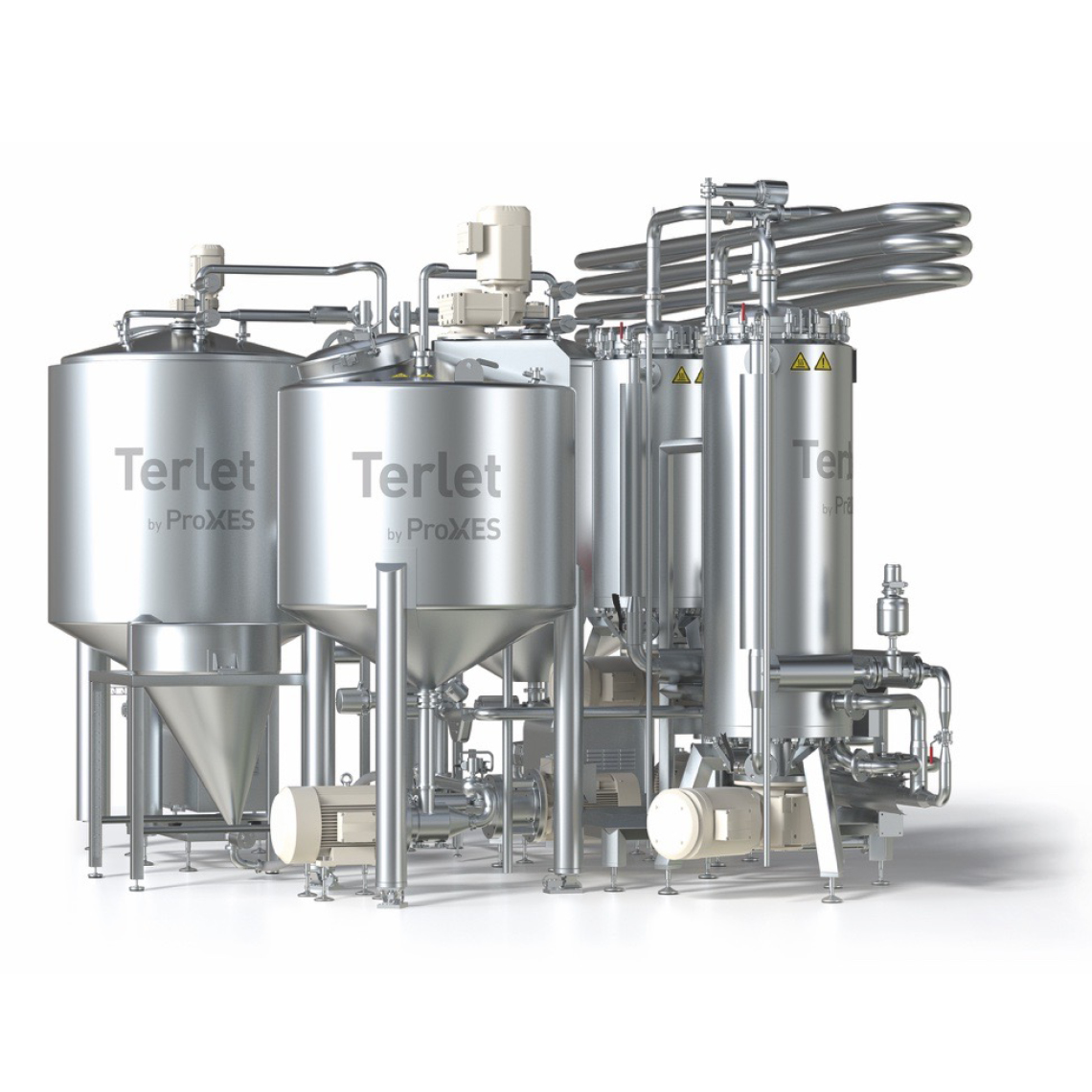
Combitherm采用直接加热技术进行大批量加工
Combitherm 设备专为大规模生产而设计,可用容积高达 1,200 升,每小时产量高达 3,600 公斤。它们既支持直接蒸汽喷射,也支持间接加热,可确保快速、温和的加工,同时将能量损失降至最低。
-
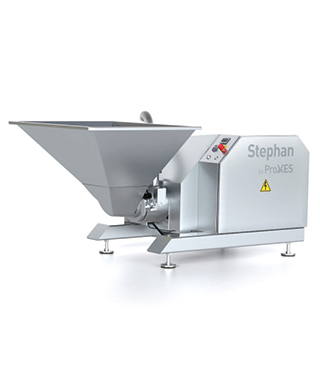
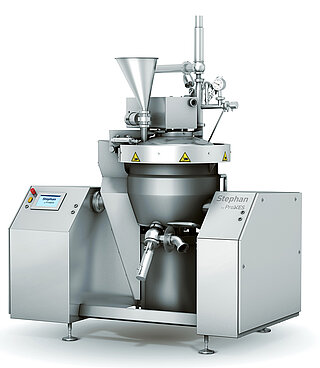
斯蒂芬通用机械紧凑灵活
Stephan 通用机非常适合中小批量生产,产量可达 1,000 公斤/小时。它们在热加工和冷加工方面均表现出色,为各种类型的产品提供了高度的灵活性。
Every line can be extended with modular technology, so your mayonnaise plant grows with your product portfolio - whether that means adding vegan variants, low-fat SKUs, or entirely new emulsified sauces.
为什么投资蛋黄酱是值得的
蛋黄酱是全球家庭和餐饮服务业的主食,其市场持续稳步增长。随着人们对植物性产品、低脂替代品和方便食品的需求不断增加,预计到 2028 年,蛋黄酱市场规模将达到 100 亿美元,年均增长率为 4.1%。有了 ProXES 加工系统,无论是小批量还是大批量生产,您都可以抓住这一增长机遇,高效地扩大生产能力。(2023 年数据桥接器市场调查分析研究)

地区视角
北美洲:由于人们对优质和素食蛋黄酱产品的兴趣日益浓厚,预计该地区将占据市场主导份额
欧洲:德国、法国和英国等国家是主要市场,对传统和低热量蛋黄酱的需求不断增长
亚太地区:中国、印度和日本等国的快速增长得益于快餐文化的发展和可支配收入的增加
拉丁美洲和中东/非洲:这些地区也在稳步增长,特别是在新产品创新和城市化扩张的推动下
蛋黄酱变化多端?没问题!
蛋黄酱是全球家庭和餐饮服务业的主食,随着人们对植物性选择、低脂替代品和方便食品的需求不断增加。有了 ProXES 加工系统,无论是小批量还是大批量生产,您都可以有效地提高生产能力。
灵活性和适应性
利用 CuliFlex 等模块化扩展技术,您可以显著扩大产品范围。我们的系统既适用于传统蛋黄酱,也适用于现代替代品,如素食或低脂品种,以及调味品和酱料。这种灵活性使您能够快速适应市场变化,而无需额外投资。
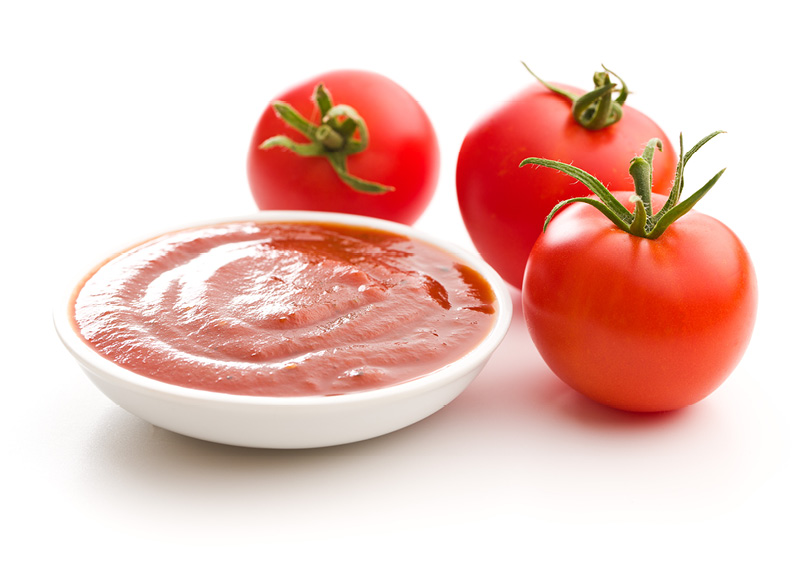
想想蛋黄酱--还有更多
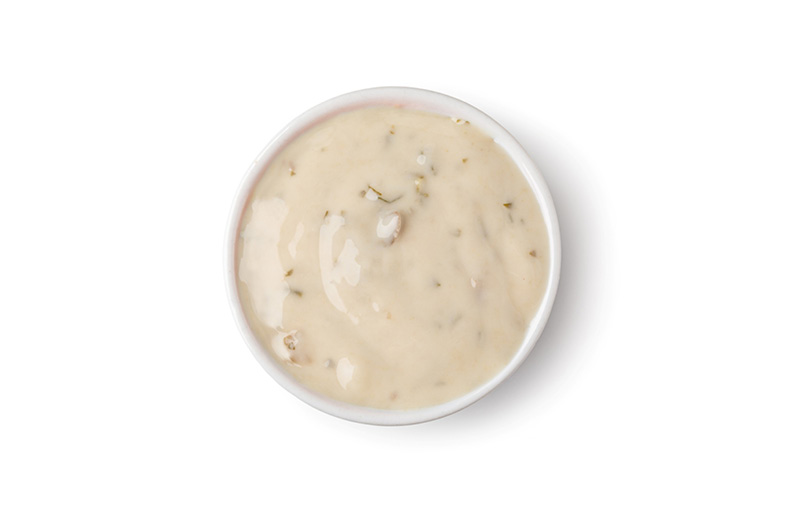
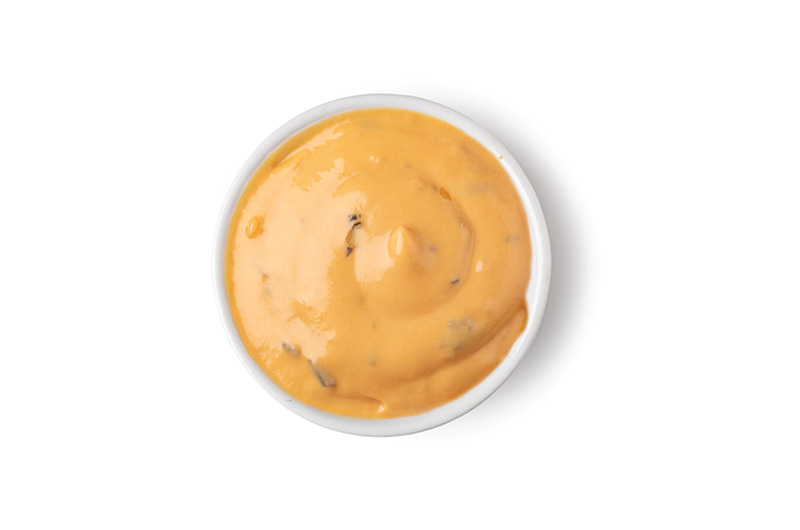
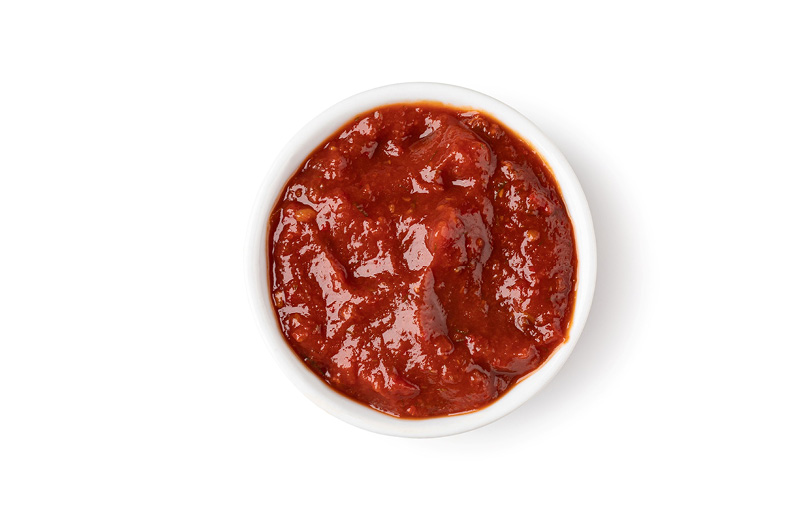
ProXES 可以帮助您制作出更多的产品,为什么还要局限于蛋黄酱呢?我们先进的加工技术可支持最高精度和质量的调味汁、汤料和酱料生产。
无论是小批量生产还是大批量生产,ProXES 系统都能满足您的确切要求--确保在广泛的应用中具有灵活性和可靠的性能。
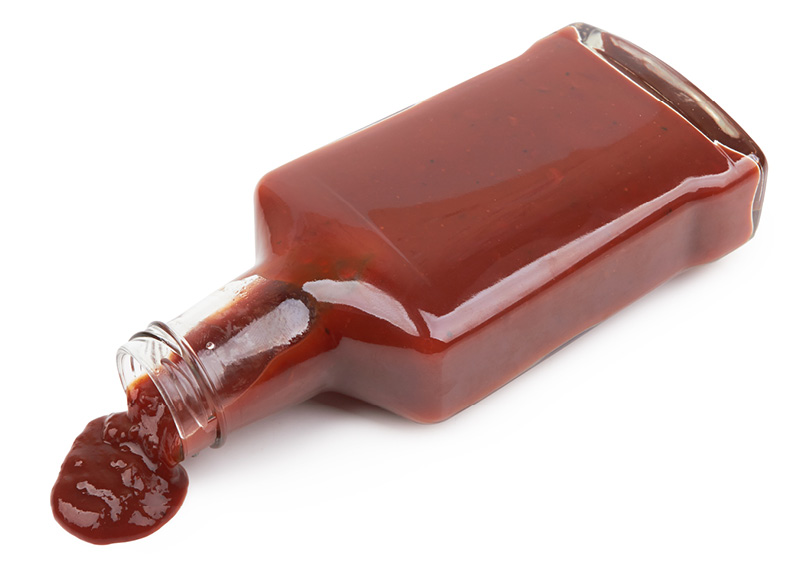
蛋黄酱的新创意?
定制生产的共同创造解决方案
在 ProXES,我们相信创新是在不断变化的蛋黄酱市场中保持竞争力的关键。我们的共同创造方法是在产品和工艺开发的每个阶段为您提供支持。无论您是在配制新配方、改进现有配方,还是在扩大生产以满足不断增长的需求,我们的专家团队都将与您通力合作。
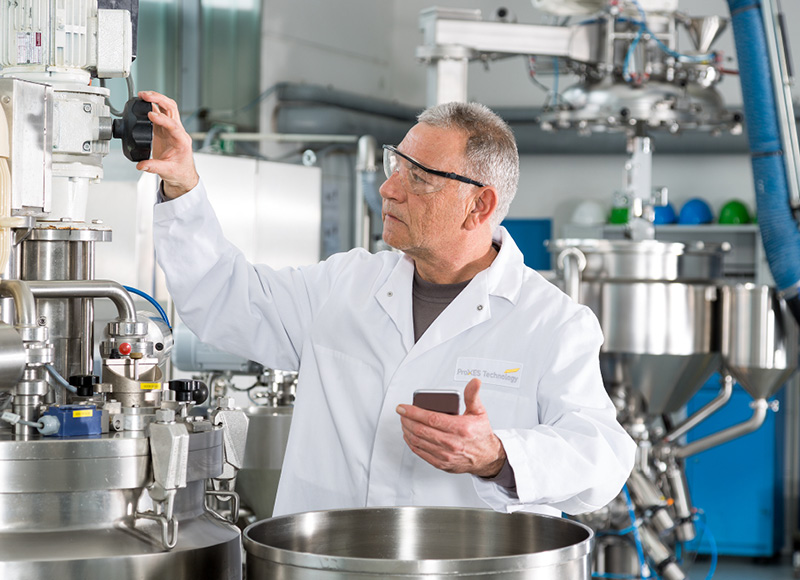
我们在先进的技术中心提供全面的服务,您可以在这里试用新配料、测试不同配方并模拟生产条件。通过与我们的技术专家密切合作,您将有机会改进和优化蛋黄酱产品的质量和可扩展性。
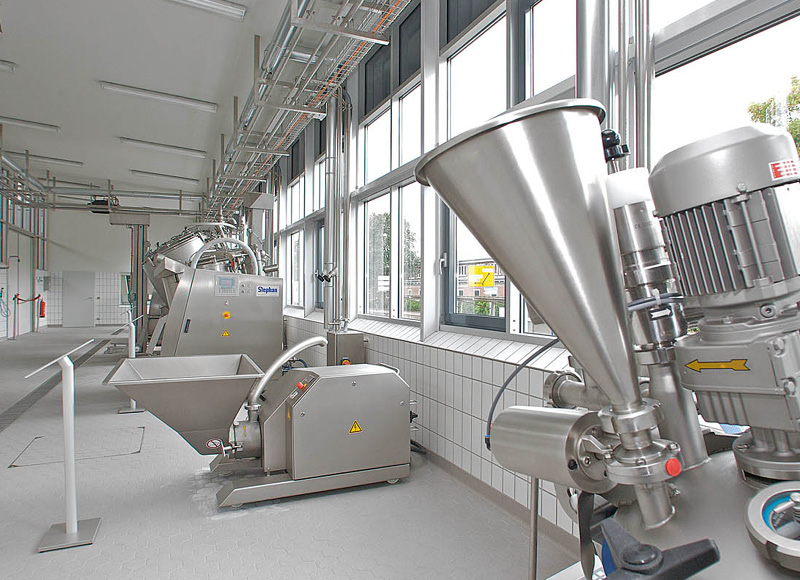
从小规模试运行到大规模生产,ProXES 都能提供灵活的解决方案,确保产品开发与市场准备之间的平稳过渡。无论是探索素食、低脂或有机蛋黄酱等新类别,还是改进传统配方的稠度、质地和保质期,我们的共同创造流程都能让您充满信心地进行创新。

凭借我们深厚的行业专业知识和尖端技术,您可以将创新理念转化为商业上成功的产品,同时快速响应消费趋势和市场需求。
用于大批量生产的高性能蛋黄酱生产线
对于大规模的工业蛋黄酱生产,ProXES 可提供完整的定制解决方案,以满足大批量生产企业的独特需求。我们的系统将高效率与卓越的产品质量结合在一起,确保您能够在不降低标准的情况下始终如一地达到生产目标。通过整合 ProxxD 等先进技术,我们提供无缝、节能的操作,旨在提高生产率的同时降低成本。无论您是要扩大产品范围,还是要扩展现有业务,ProXES 都能为工业食品生产设定新标准,帮助您在不断变化的市场中保持竞争力。
令人信服的结果
ProXES 通过强大的合作伙伴关系和开创性的解决方案实现创新。我们与领先的食品制造商合作,重新定义了蛋黄酱生产的标准。我们值得信赖的长期合作伙伴之一以其在调味酱和涂抹酱方面的专业技术而闻名,他们将我们的系统无缝集成到了他们的运营中。结果如何?提高了生产效率,加快了开发周期,推出了令人兴奋的蛋黄酱新品种--所有这些都在短短几个月内实现。
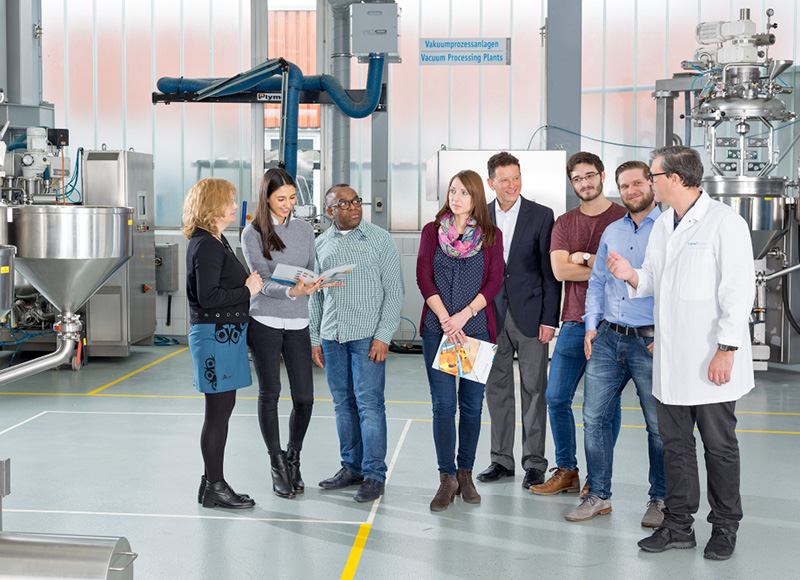
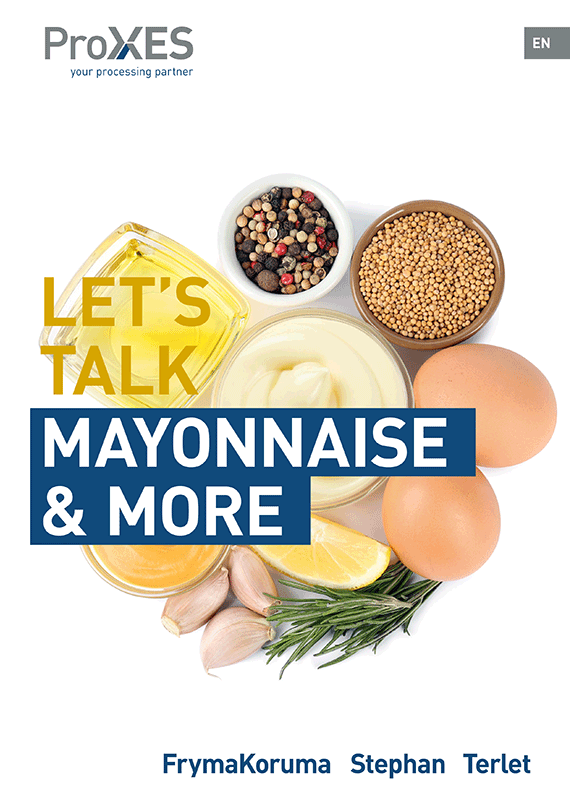
下载我们的最新手册,了解更多信息。
需要了解更多?请联系我们的专家。
FAQ – Industrial Mayonnaise Processing Plants
Below you find answers to common questions.
-
How is mayonnaise made in factories?
In factories, mayonnaise is produced as an oil-in-water emulsion on dedicated processing lines. The process includes weighing and dosing of ingredients, pre-mixing of the aqueous phase (water, vinegar, egg yolk or plant-based lecithin, mustard, salt, sugar), controlled oil dosing at rates up to 3 kg/s, high-shear emulsification into 2–10 micron droplets using a rotor-stator homogenizer, homogenization, cooling (for hot processes), and finally filling into jars, tubes, pouches, or bulk containers. Industrial ProXES mayonnaise processing plants can produce up to 6,000 kg/h of full-fat mayonnaise.
-
What is the difference between hot and cold mayonnaise production?
Cold production uses raw ingredients without heating or cooling steps – energy-efficient, with low initial investment and low maintenance. Hot production allows pasteurisation for microbiological safety, use of natural starches for clean-label products, and lower ingredient cost, and makes the same machines usable for mayonnaise, ketchup, and sauces. ProXES systems including ProxxD and Combitherm support both methods.
-
Can I produce vegan mayonnaise on the same line as traditional mayonnaise?
Yes. To produce vegan mayonnaise, the functionality of the egg yolk (typically 2–10% of a traditional recipe) is covered by a plant-based source of lecithin – soy is common, but sunflower lecithin is also widely used. Taste and color can be adjusted with plant-based flavor and colorant. The process steps can remain largely unchanged in both batch and continuous emulsifying systems, though soy lecithin tends to be slightly less efficient than egg-yolk lecithin, so process parameters like temperature and pre-mixing should be optimized accordingly.
-
What machines are used in an industrial mayonnaise processing plant?
A complete mayonnaise processing plant typically combines several industrial mayonnaise machines: an emulsifier (such as the ProxxD, up to 6,000 kg/h), a continuous processing module (CuliFlex) for starch pastes in low-fat recipes, a vacuum processing unit (Vacutherm) to prevent air incorporation, a large-batch thermal unit (Combitherm, up to 1,200 l / 3,600 kg/h), and a universal machine (Stephan) for smaller batches up to 1,000 kg/h. All can be combined into a single production line depending on capacity and recipe requirements.
-
What production capacity can I expect?
Capacity depends on the configuration. The ProxxD delivers up to 6,000 kg/h for full-fat mayonnaise and up to 4,000 kg/h for low-fat mayonnaise (30% oil). Stephan Universal Machines handle up to 1,000 kg/h for smaller batches, while Combitherm systems reach up to 3,600 kg/h with 1,200 l usable volume. Modern ProXES lines can produce up to 10,000 liters per hour in full configuration.