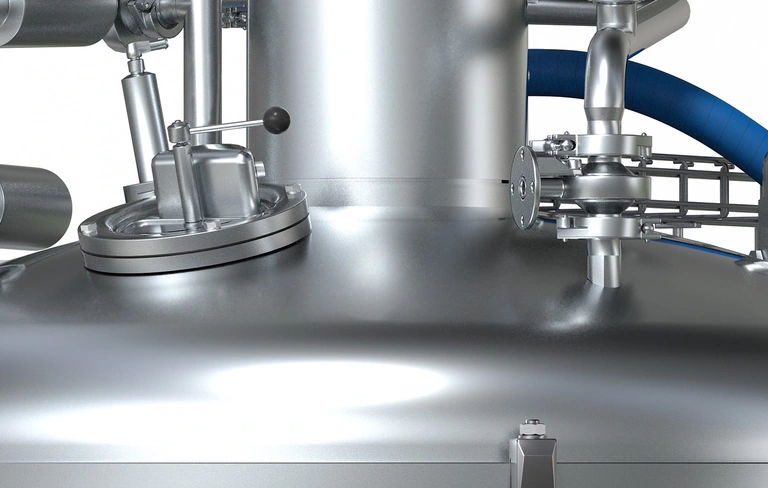
-
Emulsifyers
用于高效工艺的创新型乳化剂
ProXES 拥有广泛的产品组合,可为蛋黄酱、调味品等各种食品乳液提供解决方案。此外,还可按照严格的生产规定生产 软膏、膏霜或乳液等化妆品/医药产品。成熟的转子-定子系统技术和数十年的应用工程经验是 ProXES 技术和专业知识的基础。通过机器、工艺、配方和配方的均衡组合,我们为客户找到了个性化的解决方案,使他们能够获得最高的加工质量和工艺可靠性。
用于蛋黄酱生产线的先进乳化剂
生产高品质 蛋黄酱需要精确的技术和可靠的设备。我们的乳化机专为确保稳定、均匀的乳状液而设计,这对蛋黄酱的生产至关重要。我们拥有先进的设备,可提供量身定制的生产线,有效覆盖蛋黄酱生产的所有步骤--从混合、乳化到灌装和包装。
我们的蛋黄酱生产线将创新的乳化技术与坚固的设计相结合,确保了高产能和一流的质量。无论您需要小批量还是大规模生产,我们的解决方案都能灵活扩展,满足您的特殊要求。请相信我们的专业知识,利用我们功能强大的乳化机和可靠的生产线优化您的蛋黄酱生产。
What Is an Emulsifier Machine?
An emulsifier machine is industrial processing equipment that creates stable emulsions by blending two or more immiscible liquids – typically oil and water – into a uniform, homogeneous product. Using precisely controlled mechanical energy, the machine reduces droplets to a defined particle size distribution, ensuring long-term emulsion stability. Industrial emulsifier machines are essential wherever consistent, high-quality emulsions must be produced reliably and at scale – in the food, pharmaceutical, cosmetics, and chemical industries.
How Emulsification Works: Key Process Steps
Industrial emulsification follows a defined sequence of steps. Each step is critical to achieving a stable, high-quality emulsion:
- Phase Preparation: Water and oil phases are prepared separately, with heat applied as required. Emulsifiers, stabilizers, and active ingredients are pre-dissolved.
- Metering & Feeding: The prepared phases are precisely metered and fed into the emulsifier – either continuously (inline) or batch-wise (vessel-based).
- Rotor-Stator Emulsification: Intense mechanical shear forces generated by the rotor-stator system or colloid mill break down the dispersed phase into fine droplets.
- Homogenization: Droplet size distribution is controlled to specification. Multiple passes or adjustable gap settings allow fine-tuning of particle size.
- Temperature Management: Integrated heating and cooling ensure optimal processing temperature throughout emulsification, preserving product integrity.
- Quality Control & Transfer: Droplet size, viscosity, and emulsion stability are verified before the finished product is transferred to storage or filling.
Key Challenges in Industrial Emulsification
Emulsification in industrial environments involves complex technical and regulatory demands. Common challenges include:
- Achieving consistent droplet size distribution across production batches
- Maintaining emulsion stability under varying temperature, shear, and pH conditions
- Scaling from laboratory trials to full industrial production without quality loss
- Meeting strict GMP and hygiene requirements in pharmaceutical and cosmetic manufacturing
- Processing high-viscosity, heat-sensitive, or shear-sensitive formulations without product damage
- Integrating emulsification seamlessly into continuous production lines
- Minimizing product loss and cleaning time during product changeovers
卓越我們為食品、製藥、化妝品和化學工業提供的解決方案我們為食品、製藥、化妝品和化學工業提供的解決方案cal industries
-
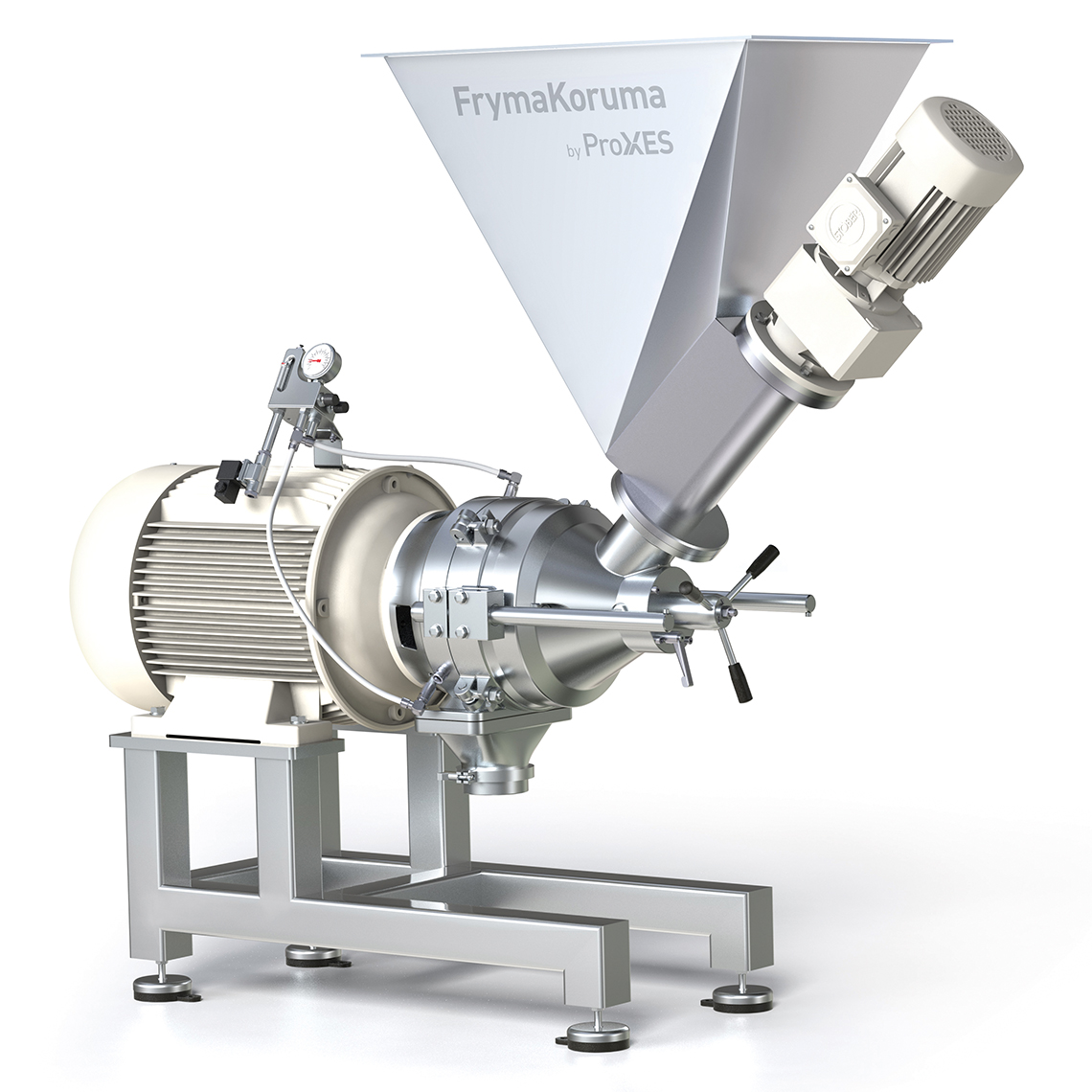
Dinex个人护理和制药高剪切乳化机
产量高达3000 kg/小时*
- 功能:
- 均质
- 混合
- 分散
- 脱泡
- 冷却
- 加热
- 清洁
- 灭菌
- 主要应用:
- 化妆品
- 无菌药品
- 乳霜
- 软膏
- 凝胶
- 牙膏
*冷加工乳化产品,基于标准FrymaKoruma配方应用的测算
- 功能:
-
DIL在线乳化机
- 产量高达60.000升/小时*
- 从实验室到工业规模
- 功能:
- 均质
- 乳化
- 混悬剂
- 主要应用:
- 酱汁和调料
- 面霜和软膏
- 乳液和混悬液
- 农用化学品
*针对用途:低粘度产品 -
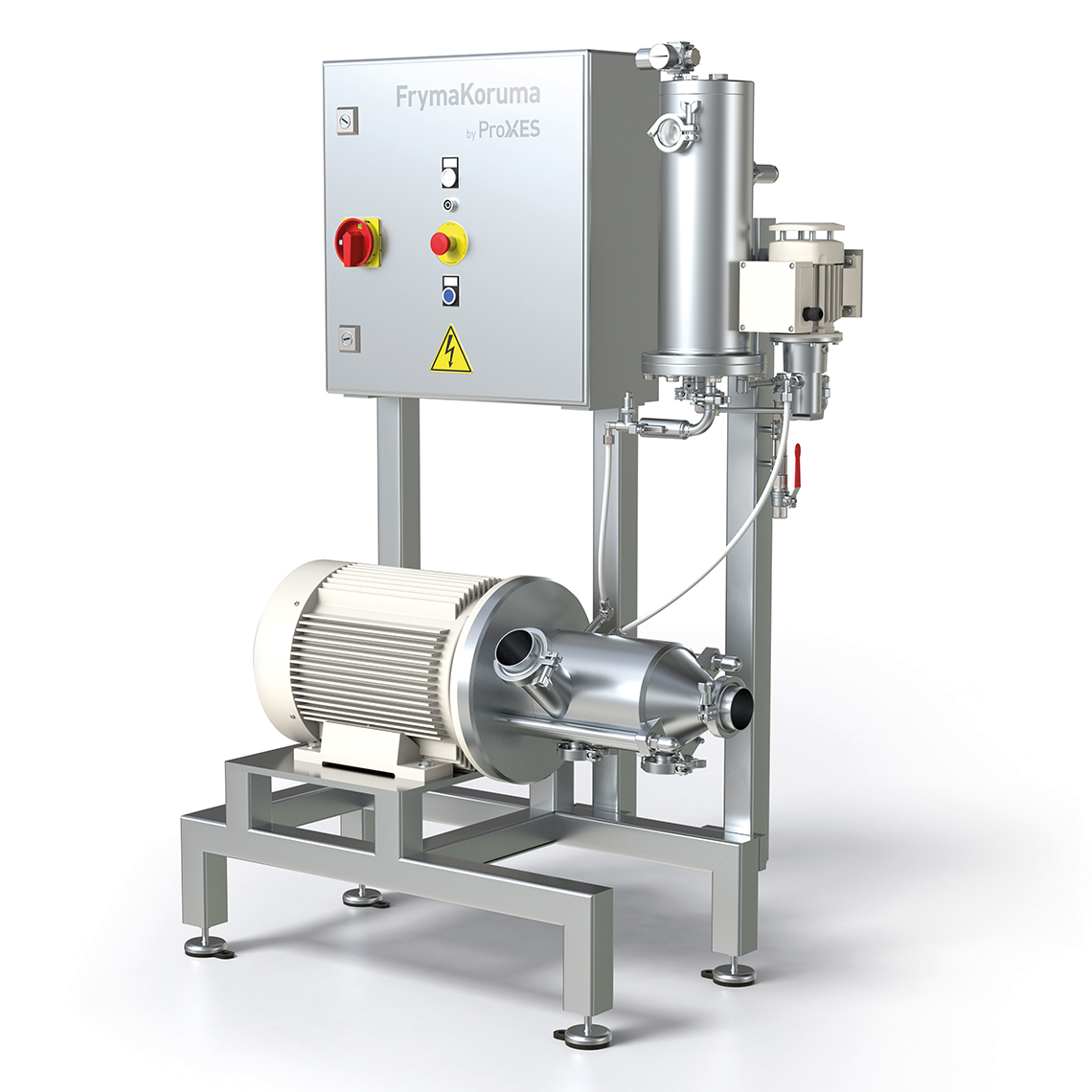
齿式胶体磨灵活的湿法研磨
- 产量高达40000 kg/h*(连续式)
- 产量高达5000 kg/h**(独立式)
- 从实验室到工业规模
- 功能:
- 湿法精磨
- 分散
- 乳化
- 主要应用:
- 大豆、大米、燕麦浆
- 坚果/谷物糊
- 片剂涂层
- 美妆产品
- 面霜和软膏
- 化学混悬液
- 润滑脂
*针对应用:低粘度产品/**针对应用:坚果、谷物、糊类 -
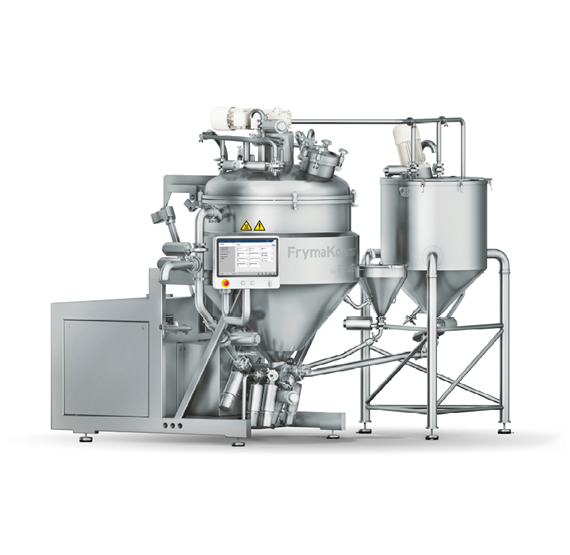
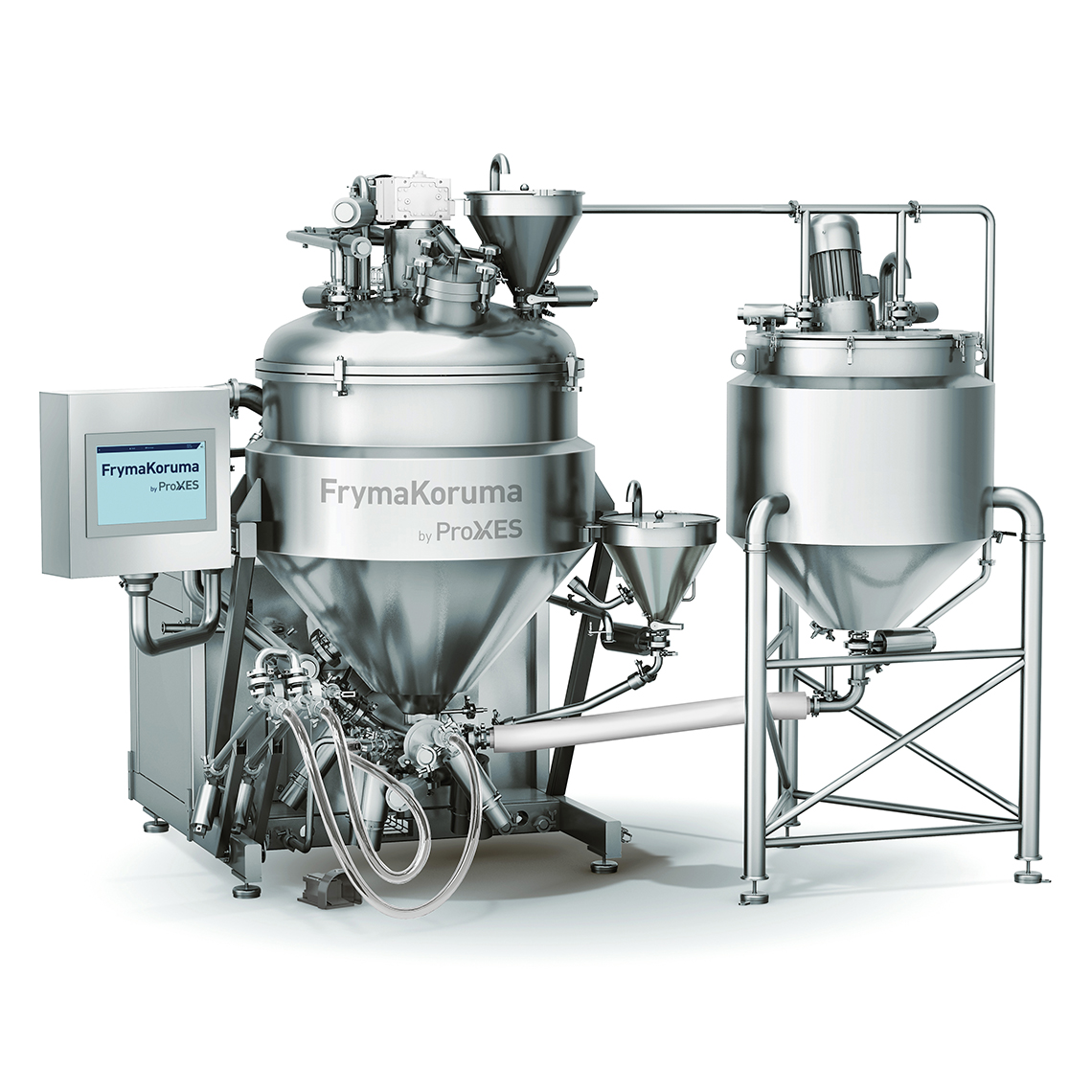
ProxxD高级乳化剂
全脂蛋黄酱的生产能力:高达 6,000 公斤/小时*。
低脂蛋黄酱(含油 30%)的生产能力: 高达 4,000 公斤/小时*。
- 定量供油: 最高 3.0 公斤/秒
- 比能量输入: 平均 5 千瓦时/吨
- 批量: 500 升
- 尺寸 - 基本概念长 230 x 高 280 x 宽 210 厘米
- 重量:约 2,000 千克
*基于 FrymaKoruma 标准配方,取决于系统配置。
下载我们的最新手册,了解更多产品信息。
下载我们的最新手册,了解更多信息。

需要了解更多?请联系我们的专家。
FAQ – Frequently Asked Questions about Emulsifier Machines
Below you find answers to common questions.
-
What is an industrial emulsifier machine?
An industrial emulsifier machine is processing equipment that produces stable emulsions by dispersing one liquid phase (e.g. oil) into another (e.g. water) using mechanical shear forces. The result is a uniform, homogeneous product with a defined droplet size distribution.
-
What industries use emulsifier machines?
Emulsifier machines are used in the food industry (mayonnaise, dressings, sauces), pharmaceutical industry (ointments, emulsions), cosmetics industry (creams, lotions), and the chemical industry (specialty emulsions, adhesives, coatings).
-
What is the difference between a batch and an inline emulsifier?
A batch emulsifier processes a fixed volume of product per cycle, making it suitable for flexible production and frequent recipe changes. An inline emulsifier operates continuously, integrating directly into the production line for high-volume, consistent output with minimal downtime.
-
How does a rotor-stator emulsifier work?
A rotor-stator emulsifier uses a rapidly rotating rotor spinning inside a fixed stator. The narrow gap between the two components generates intense shear forces, turbulence, and cavitation that break down the dispersed phase into fine, uniform droplets.
-
Which ProXES emulsifier is right for my application?
The right emulsifier depends on your product (food, pharma, cosmetics), required droplet size, production volume, and whether you need batch or continuous processing. ProXES offers the DINEX for pharmaceutical and personal care products, the DIL for continuous inline production, the Toothed Colloid Mill for fine particle reduction, and the PROXXD for high-class food emulsification. Contact ProXES experts for a tailored recommendation.
-
Can ProXES emulsifiers be used for mayonnaise production?
Yes. ProXES emulsifier machines are specifically designed to produce consistent oil-in-water emulsions required for high-quality mayonnaise and dressings. The complete ProXES production line covers all steps from emulsification to filling and packaging.